Blood Moon V3.2.0: The Late-Game Weapon and Ammo Meta Explained
Posted: Wed Sep 30, 2026 9:58 am
Blood Moon in V3.2.0 Stable is an ammo audit, and most late-game survivors fail it. An M60 with the Drum Mod feeds 120 rounds of 7.62mm — one sloppy horde night drains a full crate and leaves the player swinging a Steel Club at a Radiated Cop. Since the 1.0 crafting gates, Quality 6 weapons stopped dropping as common loot, so every casing now funds a bench recipe instead of a lucky crate. That one shift reshaped the entire endgame: survivors no longer hunt for the perfect gun, they build it, and they budget the ammunition that keeps it fed. Here is the no-fluff version — weapon picks, the Legendary Parts grind, and the three-pillar resource loop that keeps a stockpile in the black.
Pick the Attribute Before the Weapon
Choosing a gun before choosing an attribute is how a player ends up with a T6 Sniper Rifle and no Perception perks to feed it. Perks multiply damage and handling, so a specialized build beats a random "best" gun on every run.
Weapon
Ammo
Primary Use
Why It Sticks
M60 Machine Gun
7.62mm
Horde Night
Top sustained DPS, 120-round Drum Mod capacity
Auto Shotgun
Shells / Slugs
POI Clearing
Unmatched burst damage in tight rooms
Desert Vulture
.44 Mag
Elite Hunting
High per-shot damage, Gunslinger armor pen
Sniper Rifle
7.62mm
Long Range
Deletes Radiated Vultures and Demolishers
SMG-5
9mm
General Use
Highest fire rate on the most abundant ammo
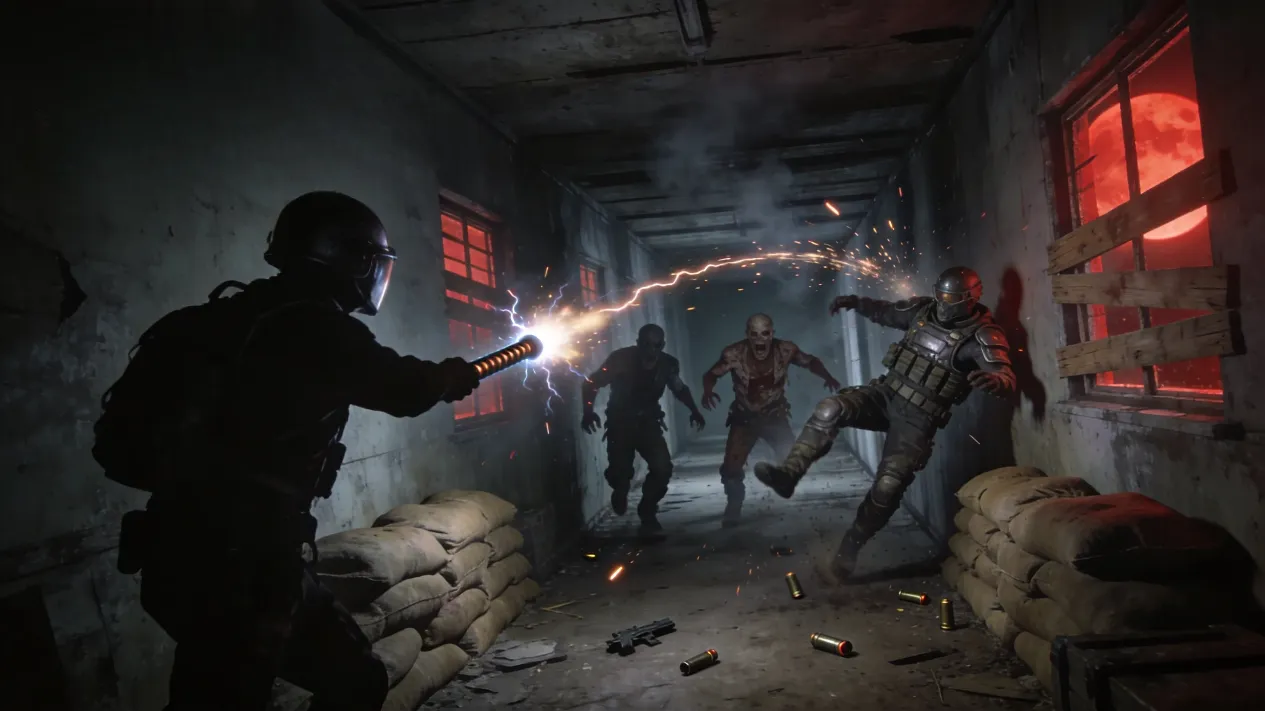
Nobody should write off melee, because it remains the cheapest ammunition a survivor owns. Strength builds lean on the Steel Club for knockdown on single targets, while the Steel Sledgehammer pays off in bottleneck corridors where one swing clips three zombies. Intellect players take the Stun Baton with a Repulsor Mod to launch a Soldier back down the hallway and buy a reload.
Legendary Parts and Tier 6 Crafting: Stop Chasing Loot
Quality 6 no longer spawns in the wild — it is Workbench work now. A T6 M60 or Auto Shotgun demands a maxed Crafting Magazine (Tactical Warfare or Shotgun Weekly) plus 1–3 Legendary Parts before committing materials.
 Infested Caches: end-of-run rewards from Tier 5 and Tier 6 Infested POI quests.
 Trader rewards: high-tier completion payouts from Rekt, Hugh, and the rest.
 High-end loot: rare Savage Country crates or high-value safes at Loot Stage 150+.
The practical takeaway is that Legendary Parts are a questing currency, not a scavenging one. Sitting on a T5 Infested Clear rotation beats driving the map looking for a crate that probably rolled a T5 pistol anyway.
The Three-Pillar Ammo Economy: Nitrate, Brass, Lead
Running dry mid-quest chain is a logistics failure, not a combat one. Three pillars carry the whole 7 Days to Die ammo economy.
Mining: Auger nitrate and coal in the Wasteland or Desert for Gunpowder; lead spawns in every biome for tips and buckshot.
Scrapping: Brass cannot be mined — wrench cars and AC units for radiators, loot candlesticks and trophies, and smelt Duke's Casino Tokens only when cash-rich.
Crafting: A Chemistry Station doubles gunpowder efficiency versus hand-crafting. That single station is the difference between a stocked crate and a panic melee build.
Rotation and Perks: Make Every Round Count
Feeding 7.62mm to a lone Crawler is a waste, and the 2026 spawn tables punish it harder than ever. Rotate by threat: SMG-5 9mm for standard zombies, Auto Shotgun shells for interiors, and the M60 reserved strictly for Blood Moon.
Perk efficiency stacks on top of that. Penetrator lets 7.62mm and .44 Mag punch through multiple enemies, effectively doubling or tripling rounds per kill. AP ammo is mandatory against Soldiers and Bikers, while Hollow Point is niche late-game because armored threats dominate the spawn table.
The loot loop funds the rotation. Infested Clear Quests routinely return more ammo than spent, air drops bring high-tier bundles when map markers are on, and Better Barter traders sell 100–500-round Ammo Bundles — cheaper per round than loose boxes.
Final Prep and Where to Verify the Meta
Melee single targets, wrench every car and AC unit, craft gunpowder at a Chemistry Station, and prioritize Infested quests for Legendary Parts and bulk ammo. Those four habits cover the entire late-game supply chain, and none of them require a single lucky roll.
 Before rebuilding a horde base, survivors should confirm current V3.2.0 mechanics and any V3.3.0 changes through official patch notes, since those updates routinely shift perk values and loot tables. In 2026 the stable branch is where the meta lives, and experimental branches can invalidate a carefully tuned build overnight. Blood Moon does not care how good the aim is — it only cares whether the crate is full when the sky turns red.
Surviving the wasteland is always significantly easier with a coordinated squad to share the burden of mining runs and base maintenance. Whether you need to catch the latest development updates directly on the 7 Days to Die homepage or coordinate your next multiplayer playthrough, keeping your team equipped is just as important as stocking your ammo crates. For players expanding their co-op circle or managing their gaming library across multiple survival titles, trusted platforms like LootBar offer a secure and convenient way to pick up game keys, gift cards, and essential gaming top-ups.
If you're looking to bring new recruits into your server to share the scavenging load and man the perimeter walls, grabbing an affordable 7 Days to Die Steam Key is the quickest way to get them geared up. Having an extra set of hands to wrench scrap, run chemistry stations, and hold down choke points can turn an otherwise devastating horde night into a clean, profitable clear.
Pick the Attribute Before the Weapon
Choosing a gun before choosing an attribute is how a player ends up with a T6 Sniper Rifle and no Perception perks to feed it. Perks multiply damage and handling, so a specialized build beats a random "best" gun on every run.
Weapon
Ammo
Primary Use
Why It Sticks
M60 Machine Gun
7.62mm
Horde Night
Top sustained DPS, 120-round Drum Mod capacity
Auto Shotgun
Shells / Slugs
POI Clearing
Unmatched burst damage in tight rooms
Desert Vulture
.44 Mag
Elite Hunting
High per-shot damage, Gunslinger armor pen
Sniper Rifle
7.62mm
Long Range
Deletes Radiated Vultures and Demolishers
SMG-5
9mm
General Use
Highest fire rate on the most abundant ammo
Nobody should write off melee, because it remains the cheapest ammunition a survivor owns. Strength builds lean on the Steel Club for knockdown on single targets, while the Steel Sledgehammer pays off in bottleneck corridors where one swing clips three zombies. Intellect players take the Stun Baton with a Repulsor Mod to launch a Soldier back down the hallway and buy a reload.
Legendary Parts and Tier 6 Crafting: Stop Chasing Loot
Quality 6 no longer spawns in the wild — it is Workbench work now. A T6 M60 or Auto Shotgun demands a maxed Crafting Magazine (Tactical Warfare or Shotgun Weekly) plus 1–3 Legendary Parts before committing materials.
 Infested Caches: end-of-run rewards from Tier 5 and Tier 6 Infested POI quests.
 Trader rewards: high-tier completion payouts from Rekt, Hugh, and the rest.
 High-end loot: rare Savage Country crates or high-value safes at Loot Stage 150+.
The practical takeaway is that Legendary Parts are a questing currency, not a scavenging one. Sitting on a T5 Infested Clear rotation beats driving the map looking for a crate that probably rolled a T5 pistol anyway.
The Three-Pillar Ammo Economy: Nitrate, Brass, Lead
Running dry mid-quest chain is a logistics failure, not a combat one. Three pillars carry the whole 7 Days to Die ammo economy.
Mining: Auger nitrate and coal in the Wasteland or Desert for Gunpowder; lead spawns in every biome for tips and buckshot.
Scrapping: Brass cannot be mined — wrench cars and AC units for radiators, loot candlesticks and trophies, and smelt Duke's Casino Tokens only when cash-rich.
Crafting: A Chemistry Station doubles gunpowder efficiency versus hand-crafting. That single station is the difference between a stocked crate and a panic melee build.
Rotation and Perks: Make Every Round Count
Feeding 7.62mm to a lone Crawler is a waste, and the 2026 spawn tables punish it harder than ever. Rotate by threat: SMG-5 9mm for standard zombies, Auto Shotgun shells for interiors, and the M60 reserved strictly for Blood Moon.
Perk efficiency stacks on top of that. Penetrator lets 7.62mm and .44 Mag punch through multiple enemies, effectively doubling or tripling rounds per kill. AP ammo is mandatory against Soldiers and Bikers, while Hollow Point is niche late-game because armored threats dominate the spawn table.
The loot loop funds the rotation. Infested Clear Quests routinely return more ammo than spent, air drops bring high-tier bundles when map markers are on, and Better Barter traders sell 100–500-round Ammo Bundles — cheaper per round than loose boxes.
Final Prep and Where to Verify the Meta
Melee single targets, wrench every car and AC unit, craft gunpowder at a Chemistry Station, and prioritize Infested quests for Legendary Parts and bulk ammo. Those four habits cover the entire late-game supply chain, and none of them require a single lucky roll.
 Before rebuilding a horde base, survivors should confirm current V3.2.0 mechanics and any V3.3.0 changes through official patch notes, since those updates routinely shift perk values and loot tables. In 2026 the stable branch is where the meta lives, and experimental branches can invalidate a carefully tuned build overnight. Blood Moon does not care how good the aim is — it only cares whether the crate is full when the sky turns red.
Surviving the wasteland is always significantly easier with a coordinated squad to share the burden of mining runs and base maintenance. Whether you need to catch the latest development updates directly on the 7 Days to Die homepage or coordinate your next multiplayer playthrough, keeping your team equipped is just as important as stocking your ammo crates. For players expanding their co-op circle or managing their gaming library across multiple survival titles, trusted platforms like LootBar offer a secure and convenient way to pick up game keys, gift cards, and essential gaming top-ups.
If you're looking to bring new recruits into your server to share the scavenging load and man the perimeter walls, grabbing an affordable 7 Days to Die Steam Key is the quickest way to get them geared up. Having an extra set of hands to wrench scrap, run chemistry stations, and hold down choke points can turn an otherwise devastating horde night into a clean, profitable clear.